
Forward Note - 20260628
What's up with the tech vol?
Another week down in the US equities market: the tech-heavy Nasdaq lost more than 4.5% while the S&P 500 lost a little bit more than 2%. As we head halfway through the year, these are definitely some interesting data points to sit with. And it will be interesting to see how the market behaves early next month, to see whether that trend was just mere portfolio rebalancing or something … deeper.
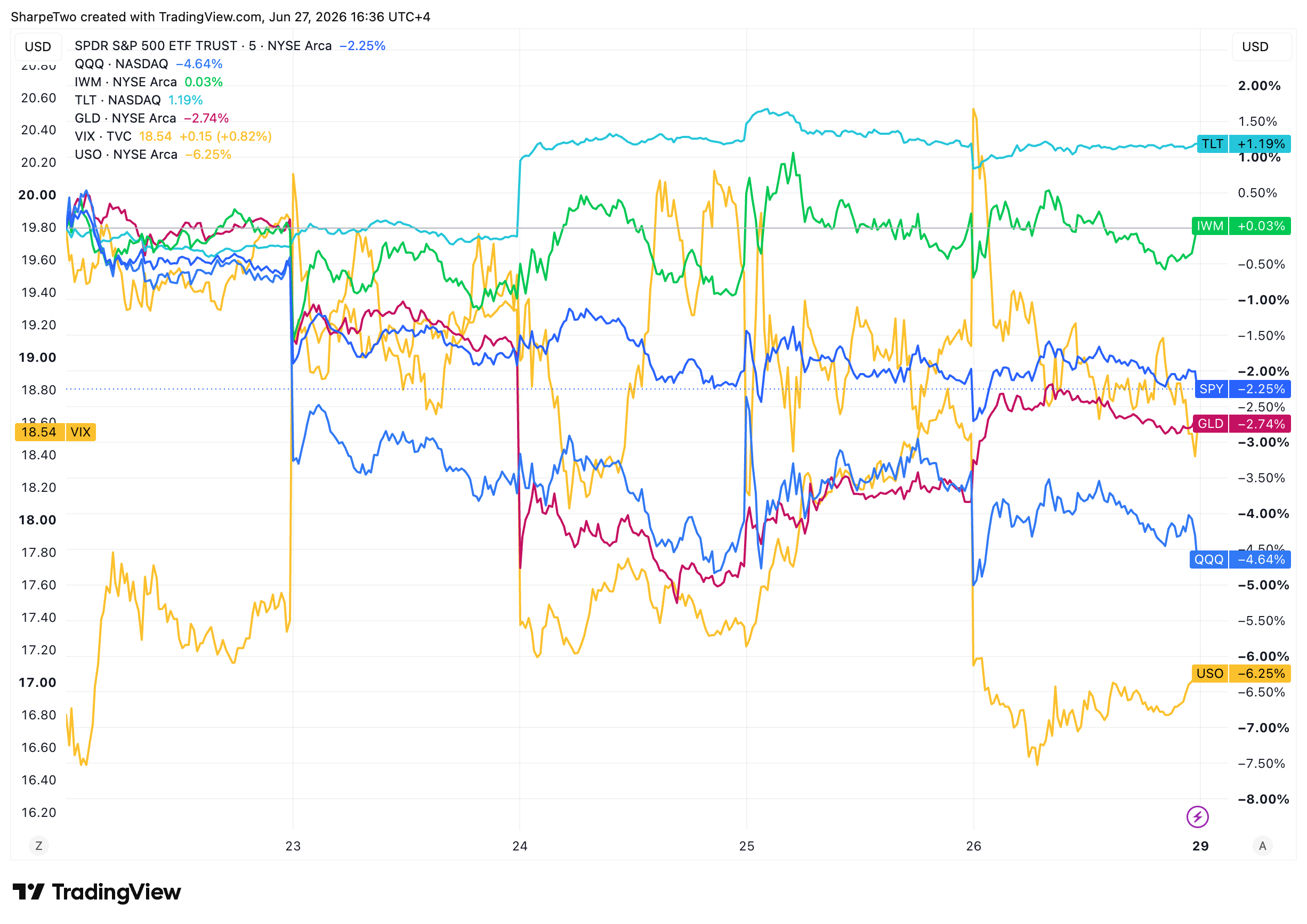
Indeed, the move was not tied to equities alone: gold lost another 3% as well, now far from the all-time high it made early in the year, and the reopening of the Strait of Hormuz has USO falling further still. The price of oil is already well below where it sat before the war, as demand is obviously weakening.
You did not need much to start hearing talk of a potential deflationary regime waiting around the corner, despite some inflation numbers coming in slightly higher than anticipated this week.
Needless to say, there are conflicting reports about the true health of the global economy and very few answers. What has been striking, though, is that the volatility episode that started in mid-June picked up again this week, after softening the week before, pushing 30-day realized volatility well above 15%, to 16.92%.
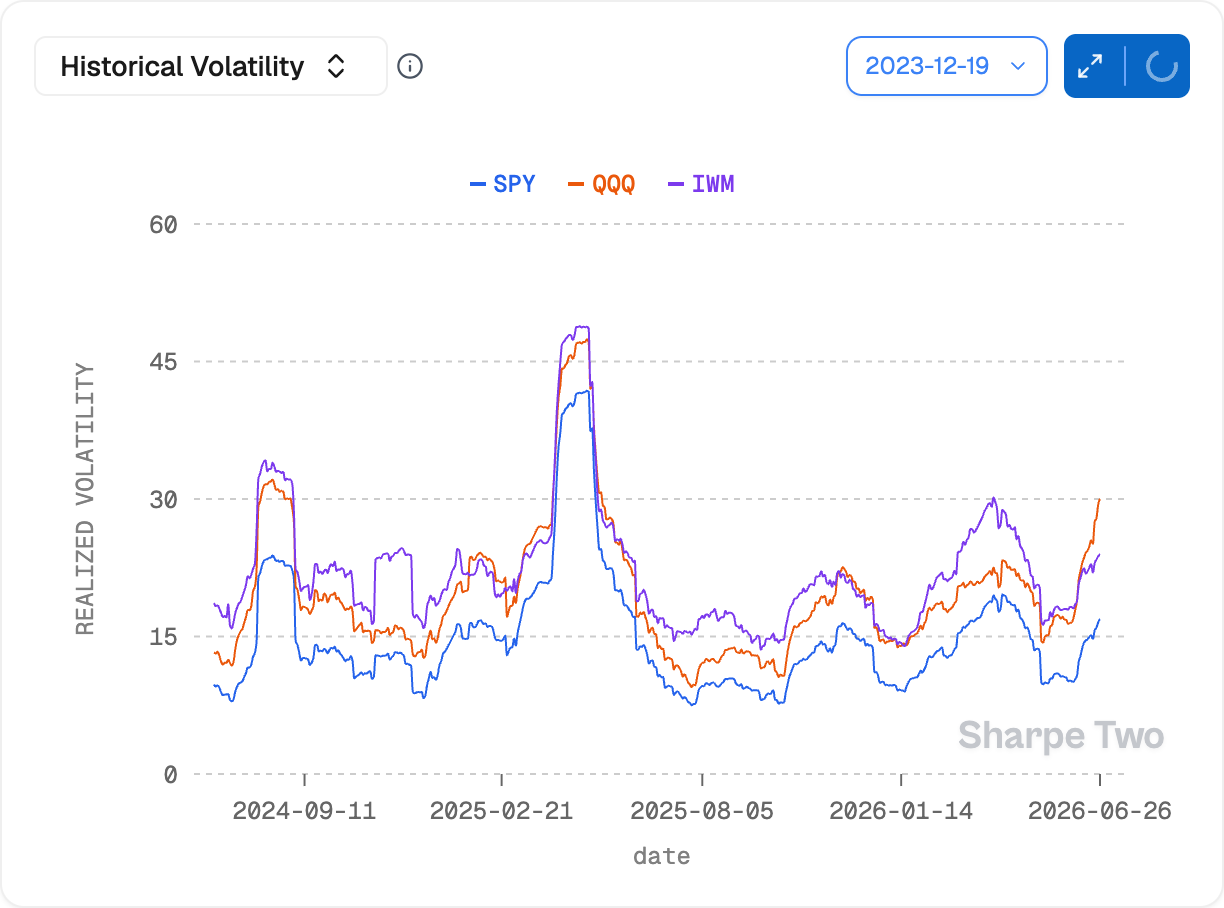
Is this high? Yes, it is. To offer some perspective, at the peak of the geopolitical tension in H1 2026, realized volatility flashed 19.5% on the S&P 500. The Iranian vol premium is getting slimmer and slimmer, and what is interesting is that no obvious catalyst has been driving the recent moves. What is even more impressive is that realized volatility in the Nasdaq is now at a level we last saw in August 2024, when a gap down in equities on a poor NFP combined with a sharp move in the yen to trigger a selloff in overleveraged positions.
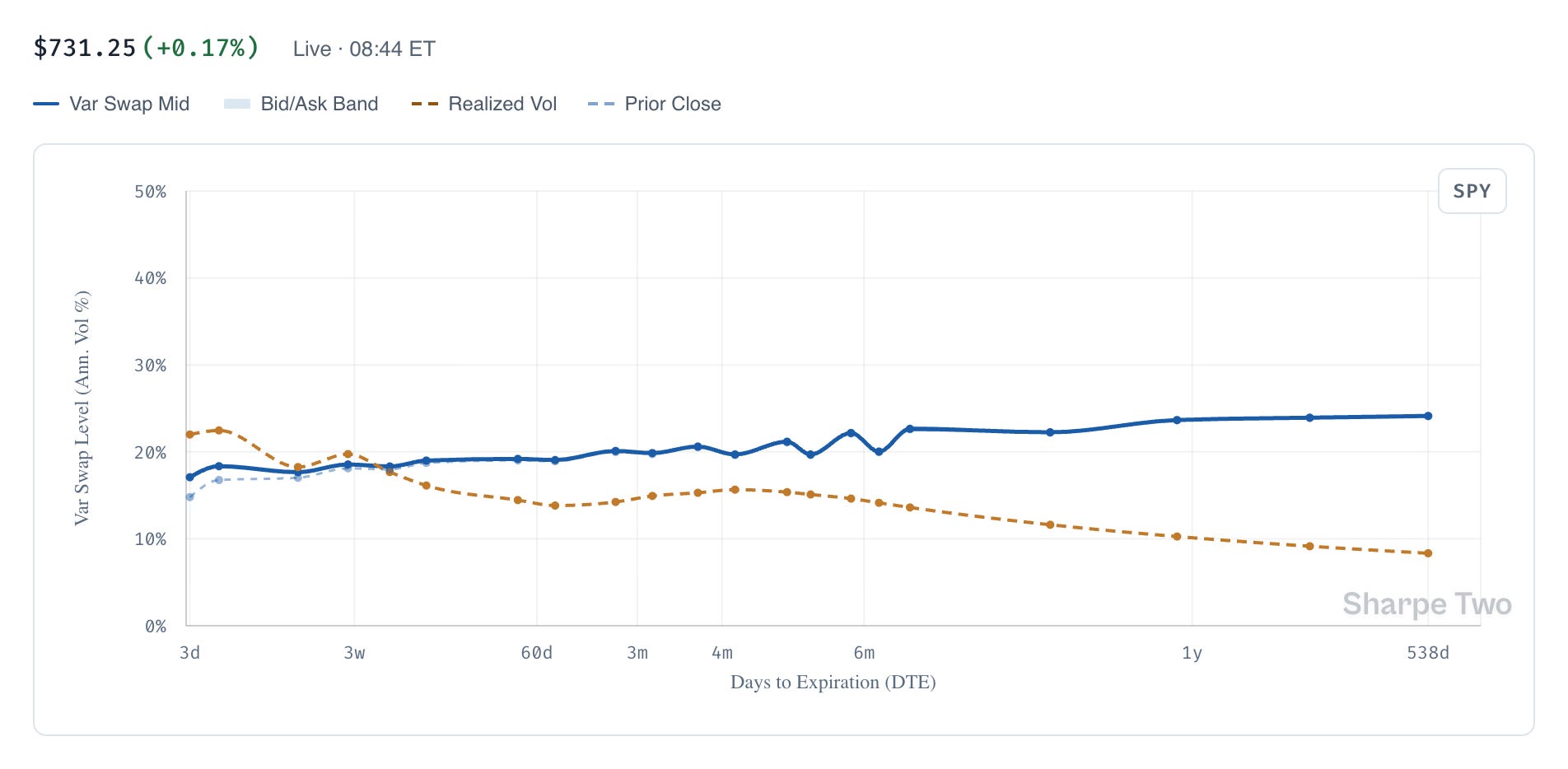
Needless to say, this change of pace in realized volatility was not on our bingo card a few weeks back, and at this rate it could start to challenge the lazy-summer hypothesis over the next few weeks. At the moment, options at the very front of the curve are still not paying enough for the risk in the marketplace to be worth selling, unless we were to see a steep drop in the daily swings.
That hypothesis still has some legs, and waiting until the turn of the month, when the portfolio dressing is finished, matters before drawing any firm conclusion. However, the cool-off will have to happen sooner rather than later. Many portfolio managers follow volatility-based allocation, and with levels climbing dangerously high, they may have to trim their holdings, potentially accentuating some of the swings.
One thing is for certain: the variance swap curve is as flat as we have seen it through Q2, where a strong and healthy contango held for most of the period, and it stayed glued to the 20% level for most of last week. Nothing meaningfully above it, and any attempt by implied volatility to move lower was constantly met by more swings in the equity market dragging it back up. That is pretty much in line with the current level of volatility of volatility, which has also climbed back up over the last few weeks.
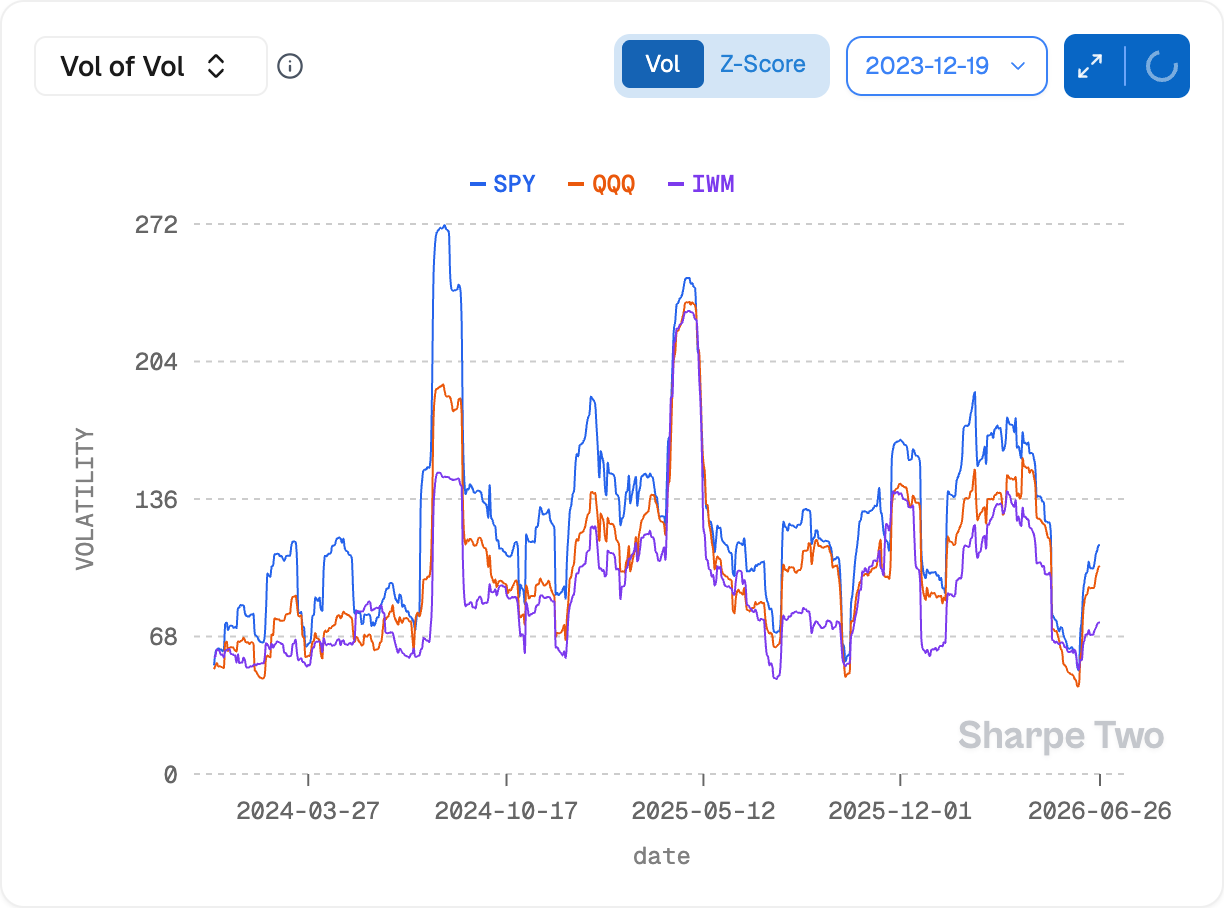
It sits in the reasonable part of its range, the kind of level where a 3-point intraday move in the VIX should not feel strange, but well short of the genuinely scary readings we saw at the peak of the Hormuz crisis.
But let’s go back to QQQ for a second: what is particularly striking is that while realized volatility is now past its August 2024 level, vol of vol is behaving pretty well. Obviously it could still spike higher over the next few weeks, but at this stage that is not what our models are saying.

The likelihood of it cooling off over the next few weeks is high, at roughly 70% for now. It is obviously just a probability, and with the right piece of news an adverse move could still occur. But we are not there yet.
So, looking at the tech sector, which is the object of so much wild speculation, we end up with a paradox: realized volatility is clearly at an unusual level, while volatility of volatility, though elevated, is pretty much normal. What to make of it? As far as we are concerned, vol of vol has the last word here: plenty of things can make stocks move, that is the life of the market. What is much more concerning is when the price of insurance itself is not stable, because that reflects real, deep indecision among market participants.
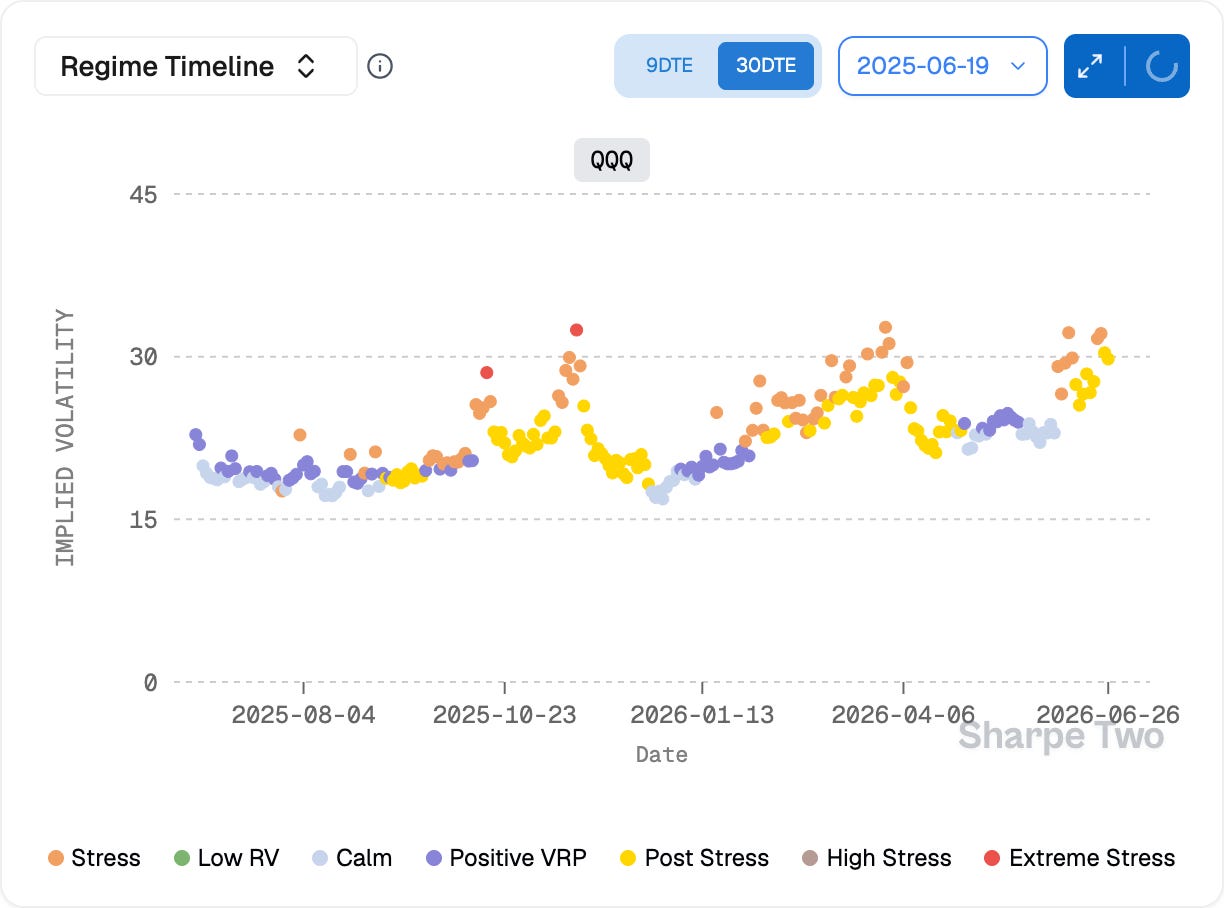
Still, we are not denying the stress, or the clear change of regime, where the floor in VXN is probably closer to 22 than the 17 we saw last year. But the market has not shown it is ready to pay much beyond 32. Until when? Well, if realized volatility keeps climbing, a spike into the high 30s or low 40s would be far from farfetched. Again, that is not what our models have in store for the next few weeks, but let’s look past the summer: if that June moment proved not to be an anomaly and high realized volatility is still a feature of the market in early September , the price of hedges may not stay as “low” as it is right now.
We do not think this is a reason to panic. But it is definitely worth respecting the data, and maybe buying some hedges that expire at the end of 2026. Better safe than sorry.

In other news
Here is another piece of news that may not soothe investors’ nerves: we learnt yesterday that OpenAI may be postponing its IPO to somewhere in 2027. Of course, there has been no official communication on the matter, but the speculation cites volatile market conditions as the main reason.
This is obviously only the tip of the iceberg. The finance game is often won by dealing well with incomplete information, and we did not need much to draw our own inference about the state of the frontier lab’s balance sheet. The market may be moving more than usual, but having to show a balance sheet as bleak as some of the wildest figures suggest may simply be the nail in the coffin.
It is easy to get consumed by the day-to-day of the market and end up thinking you hold the smartest view in the room. But we will dare a more cynical take: does the balance sheet really matter? Can the United States afford to lose ground to China in the AI race? We do not think so, and the current and previous administrations have repeatedly proven they will not let that lead go easily. So the only question that matters is: what are the conditions that could hand an irrevocable lead to the Chinese? We have a few ideas: a stock market down 40%, for instance, and a severe, prolonged bloodbath in their tech sector. We are not saying it cannot happen, but a very powerful government has every incentive to do whatever it takes to make sure it does not.
Thank you for staying with us until the end. As usual, here are two great reads from last week:
Bitcoin has hit a 20-month low and is failing to be anything other than a risky asset, fairly correlated to the rest of the market. Yet here is an interesting paper that uses order flow in currencies worldwide to anticipate moves in the digital currency. The study stops in 2022, unfortunately, right when a new regime started for crypto. It would be interesting to see whether the predictability is still there.
We also learnt this week that one of the most influential figures in modern finance and markets has died at age 100. Alan Greenspan, often called the Maestro, oversaw some of the most important events of the last 30 years, whether directly at the helm of the Fed or later as a kind of policy oracle. Here is a long piece from the FT in his memory.
That is it for us this week. We wish you a great week ahead, a little less realized volatility, and, as usual, happy trading.
Ksander