
Forward Note - 20260412
All quiet on the Middle Eastern Front
The equities market finished the week in levitation after a big sigh of relief was heard all over the globe on Tuesday night and the announcement of a temporary ceasefire of two weeks between the different parties.
As a result, the SP500 added a little bit more than 3% while the Nasdaq100 rebounded a little less than 4%. Some well-needed buy actions in a year that was supposed to be the year of deals in Trump’s second term, and after a 2025 marked by rising geopolitical tensions, global tariffs and arm-wrestling with China.
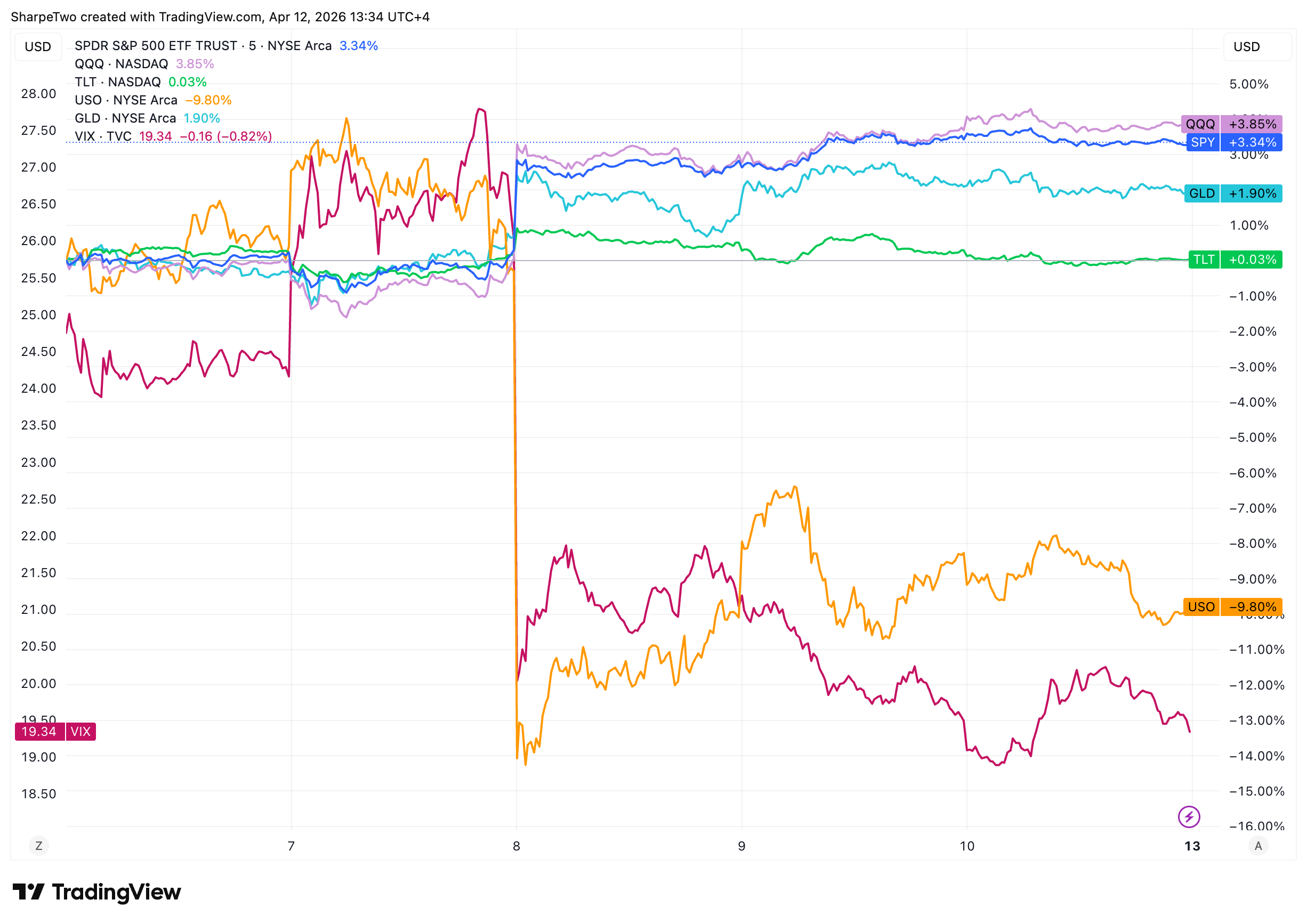
The VIX collapsed to finish right on the 19 handle for the first time since February 26. Is it going to stay there? That is the one million dollar question. And you’d better answer quickly because by look of inflation numbers, one dollar today will be worth way less tomorrow.
Let’s rewind: on top of the ceasefire, some talks were scheduled in Islamabad over the weekend between Iran and the US. The first direct and the highest official diplomatic encounter between senior leaders of both countries for the first time in 40 years. That was significant and many saw in that historical meeting the sign that everything was over: everybody would sign a peace deal, whether or not it would be respected was another question, but we wouldn’t hear about the middle east for at least … 6 months.
Well, well, well. The talks didn’t go as planned and oh, surprise! JD Vance who was leading the US negotiation team announced a few hours ago that Iranians failed to give guarantee on their nuclear program, while the Iranians insisted that the US must earn Iran’s trust before making “excessive demands”. And why would it be otherwise? As a reminder, two weeks of extensive talks and rumors of a deal on the nuclear program in Geneva only ended up … in bombs a few days after. Or the fact that the deal signed on the buzzer by Pakistan did not include (sic) Lebanon, as if it was some sort of service package a software salesman would negotiate with its management before the end of the quarter. Let’s just say that it doesn’t take a PhD in geopolitics to see the gap between the two camps is still pretty wide.
What about the gap that interests us the most in this newsletter? The difference between implied and realized volatility?
Well, it got obliterated over the last few days as the marketplace was a lot less inclined in holding expensive insurance premiums, betting on a prompt resolution of the conflict.
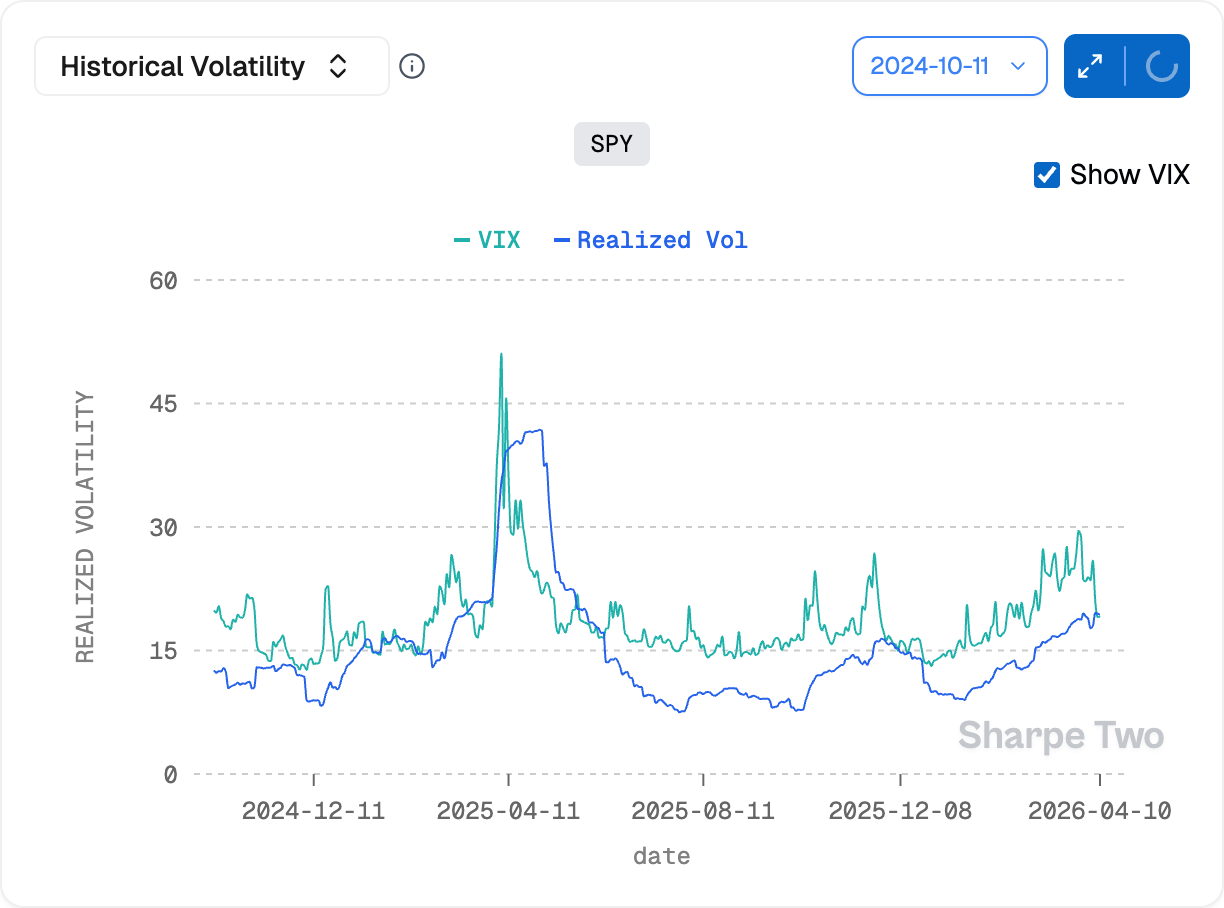
Zero. Yes, exactly zero for inly the second time since June last year (and already right before the escalation of the war between Israel/US and Iran). You see where we are going with this? We hinted at it during the middle of the week with our first “You do not have to trade” Signal du Jour of the year.
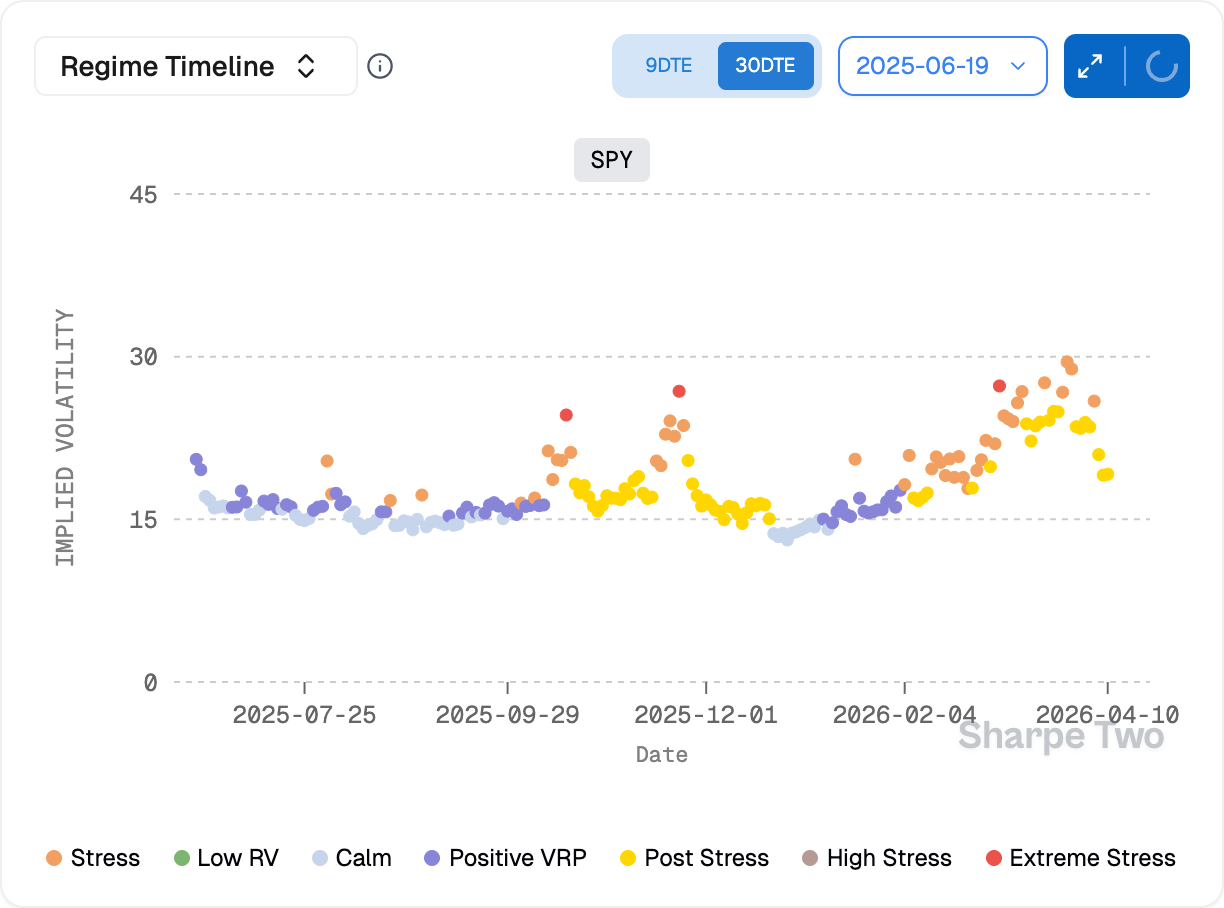
There are often once or twice occurrences like this a year, and they all share the same characteristics: the market is getting exhausted by weeks of high uncertainty and lack of direction and rush to go back to where things should be but the gap with the objective reality is … wide. It is a typical caracteristics of post stress regime market.
These claims may be tempered by a little bit more subjectivity than usual so let’s bring back some objectivity:
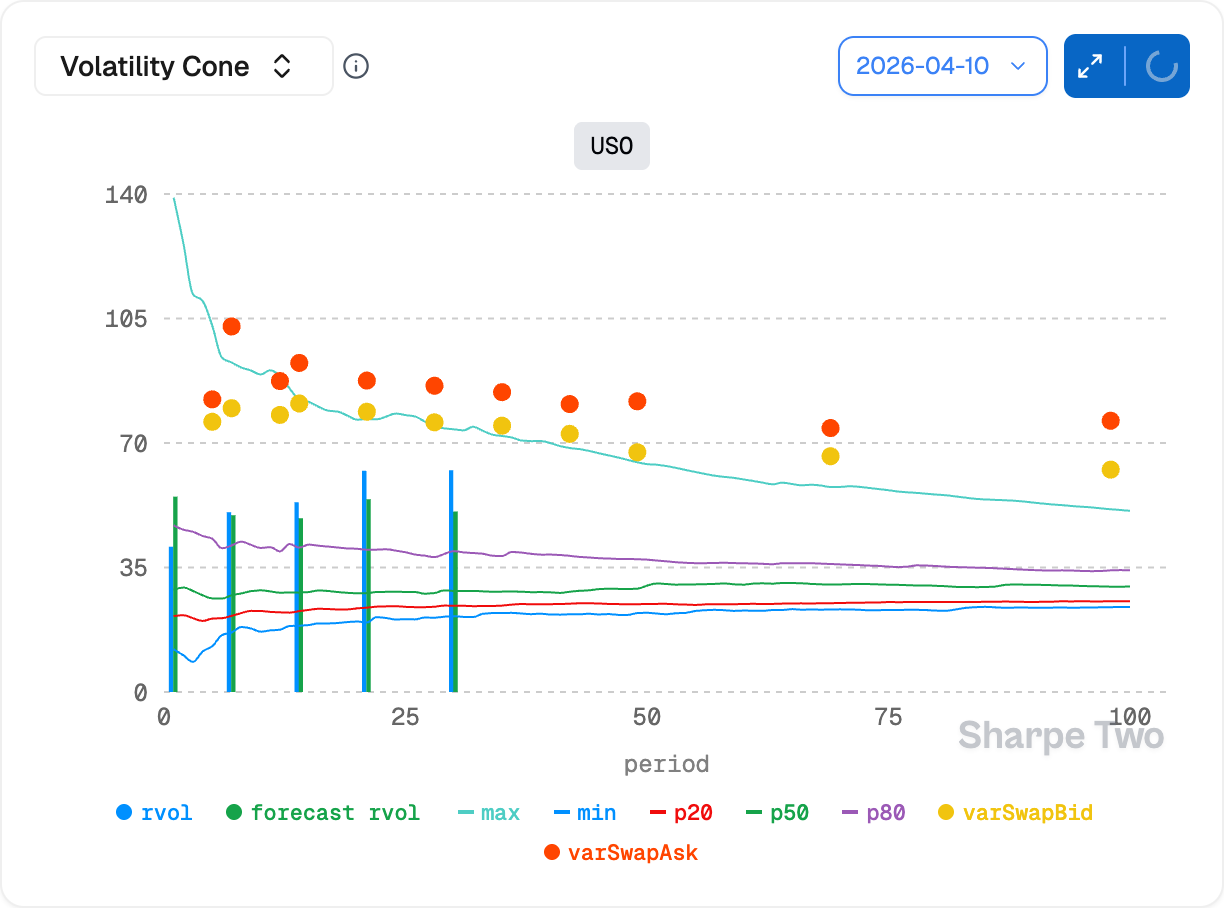
The realized volatility observed in the oil market (taking USO as a reference) is still at 62.5% a few percentage points away from the highest observed over the last two years. You do not go from 62.5% back to 20% in a couple of days. That process is much more diffuse and takes time. The same can be said with realized volatility in US equities. While 19.5% is not as impressive as what was observed this year in most of the commodity complex, it is not something that will go back to 12% in just a few days, especially if the market’s perception is still that there is work to do before a durable solution is found.
The opposite is true: if some miracle was happening on the geopolitical front, the kind of 100-point day in the SP500 we observed a few times the last two weeks, could quickly challenge the call side of your volatility harvesting position.
Now we could be completely wrong and things die out and stop moving entirely. But that would be hoping, trading on “vibe” and not on numbers. The numbers as they sit right now scream “stay away, there is no obvious hedge”.
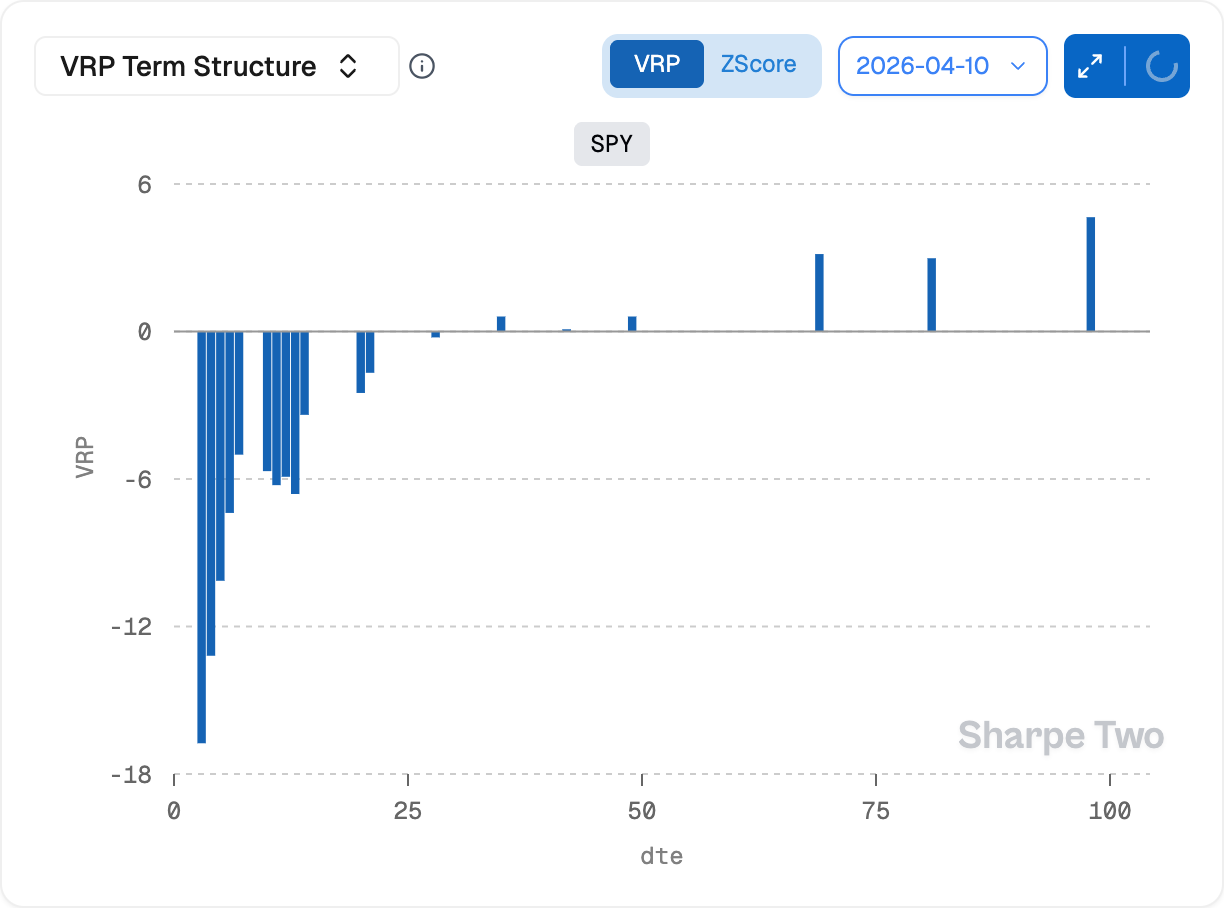
For months, in particular from June last year, we have encouraged our readership to ignore the bleakness in the news and harvest some pretty healthy conditions in the variance risk premium observed: one could say whatever they wanted but selling VIX 18 when market moved only 10 were fantastic conditions that lasted a long time. The conditions are completely different now and one should not ignore them.
Some clarification here: we are not saying that because of the war in Iran you shouldn’t trade, although it is surely related to some of the numbers we see. We are only saying: you have no clear statistical advantage right now in being the insurer of last resort in this market.
So why would you?
Humans, and in particular retail traders fail to adapt quickly to new market conditions, and are very quick to think that new conditions have arisen and that this time, it will be different. Remember the year 2022?
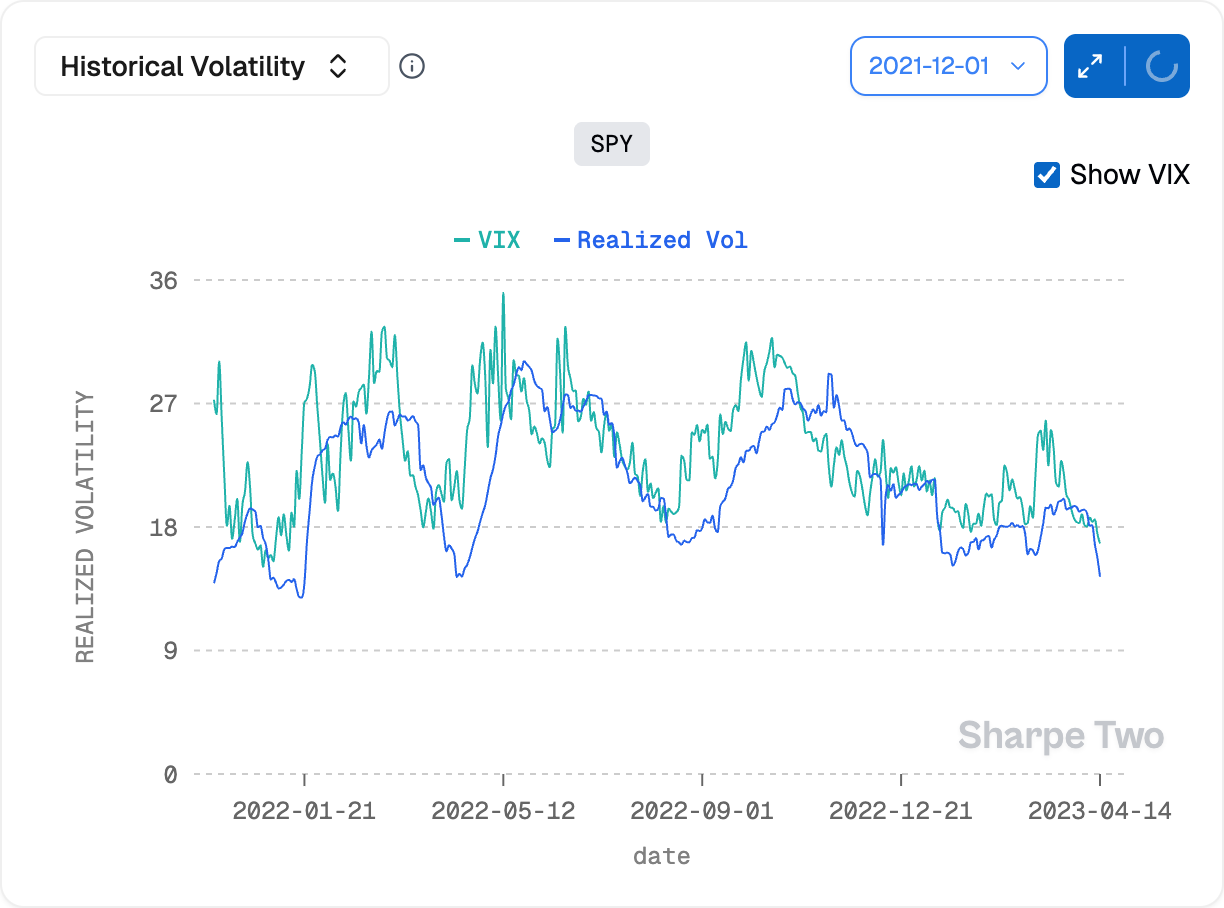
Where Russia invaded Ukraine and inflation (already high so slightly different than this case here) went through the roof? Remember what the market conditions were? Rocky, not particularly pleasant, with a VIX constantly high, but not high enough as the market perception was that this would be settled at some point in time. Just not sure when. And as a result a variance risk premium flat or pretty negative for a large portion of the year despite implied volatility being quite elevated.
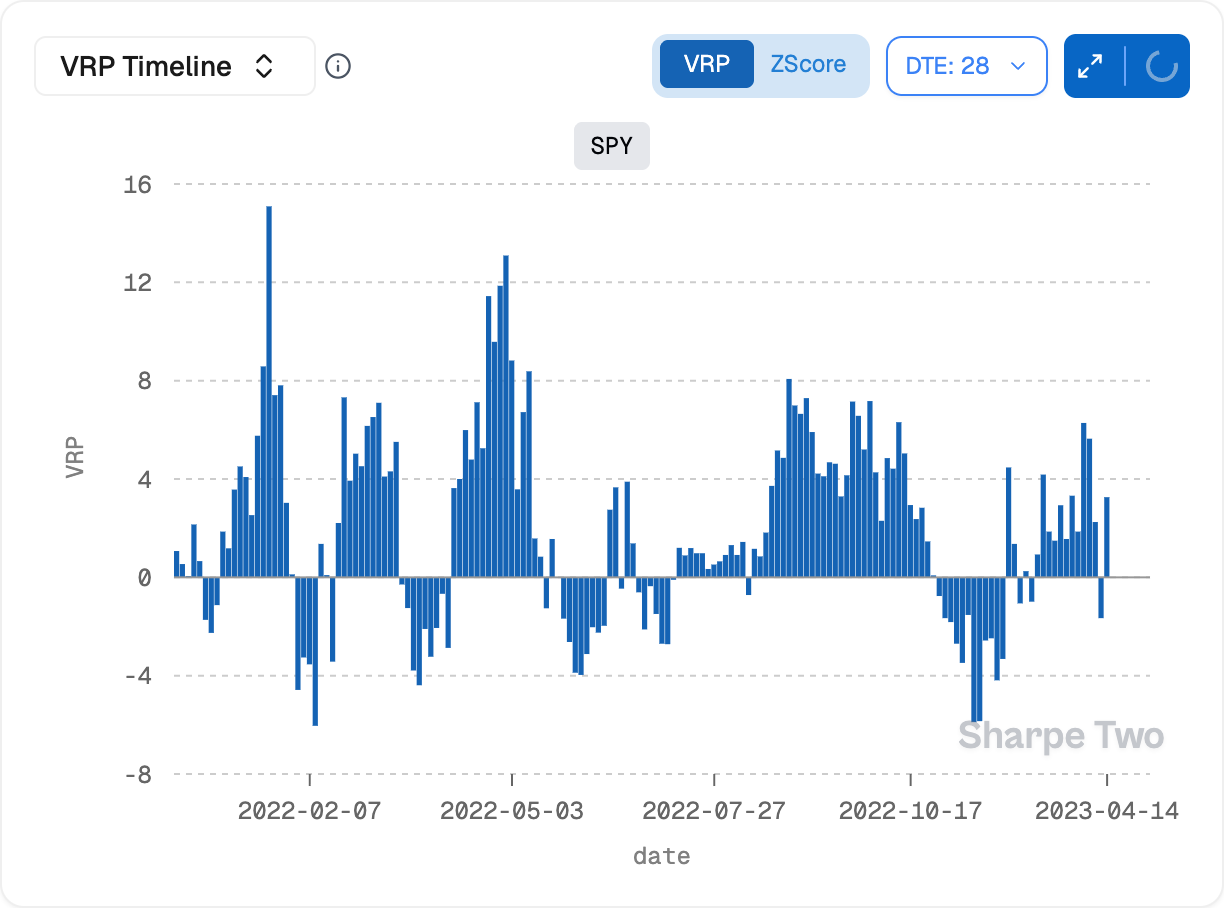
We hope 2026 isn’t going to be a remake of that period. But one should be advised to get ready for that eventuality and adapt quickly: what worked from June to even Q1 this year if you put commodities aside, may come to an abrupt end over the next few weeks.
It is obviously too soon to tell just yet.

In other news
Anthropic cannot leave the public eye these days. They made the impressive claim that their next model was too powerful to be released to the public and created a task force with a dozen enterprises across the US to make sure they caught 0 days and vulnerabilities in their software before being released. One has to wonder if Mythos was used on their own codebase to avoid the code leakage … of their star product Claude Code. Apparently not.
What is interesting though is the market reaction with many cybersecurity companies down quite significantly on the news that they could become obsolete. As if these companies would never think of using Claude to improve their own products, catch bugs, and ship better software. The market sometimes has the memory of a goldfish.
That is, obviously, if they can. Because what is also apparent is that Opus 4.6 has been nerfed. And this is not just a wild claim: some pretty senior engineers at AMD came up with statistics and numbers to prove their point.
It is not the first time Anthropic has used that tactic to promote the next iteration of their model. Already a year ago, before Opus 4.5, similar language was used, with, almost at the exact same time, a noticeable decrease in performance for the daily user.
We like Anthropic. But it wouldn’t be the first time that a company, in complete control of the supply, decreases the quality of a product to release an “improved” version that is only mildly better than what the original was, but the feel for the user, is like a breath of oxygen after three months in apnea.
A neat trick, they may not be able to pull ad vitam eternam.
Thank you for staying with us until the end, as usual, here are two good reads from last week.
When we hear expatriation in the West, we often imagine glamorous life in Singapore, Dubai or Hong Kong. Yet for a large part of humanity, expatriation often means accepting hardship abroad to support a family at home. Here is a very touching essay from a young Filipino I had the pleasure to work with, and reminds us how much privilege we have, when one is born, on the right side of the planet.
Congrats, humans! We managed to go further in space than we ever have and the Artemis II crew came back from that trip successfully on Friday night - right on time for the after-work drink. How good are NASA engineers, honestly? - We get it though, if you are not a science nerd, this may feel like just meh. And we don’t blame you. However, here is a (not too nerdy) article about why this is a big deal.
That is it for us this week. We wish you a not too rocky week ahead, and as usual, happy trading.
Ksander